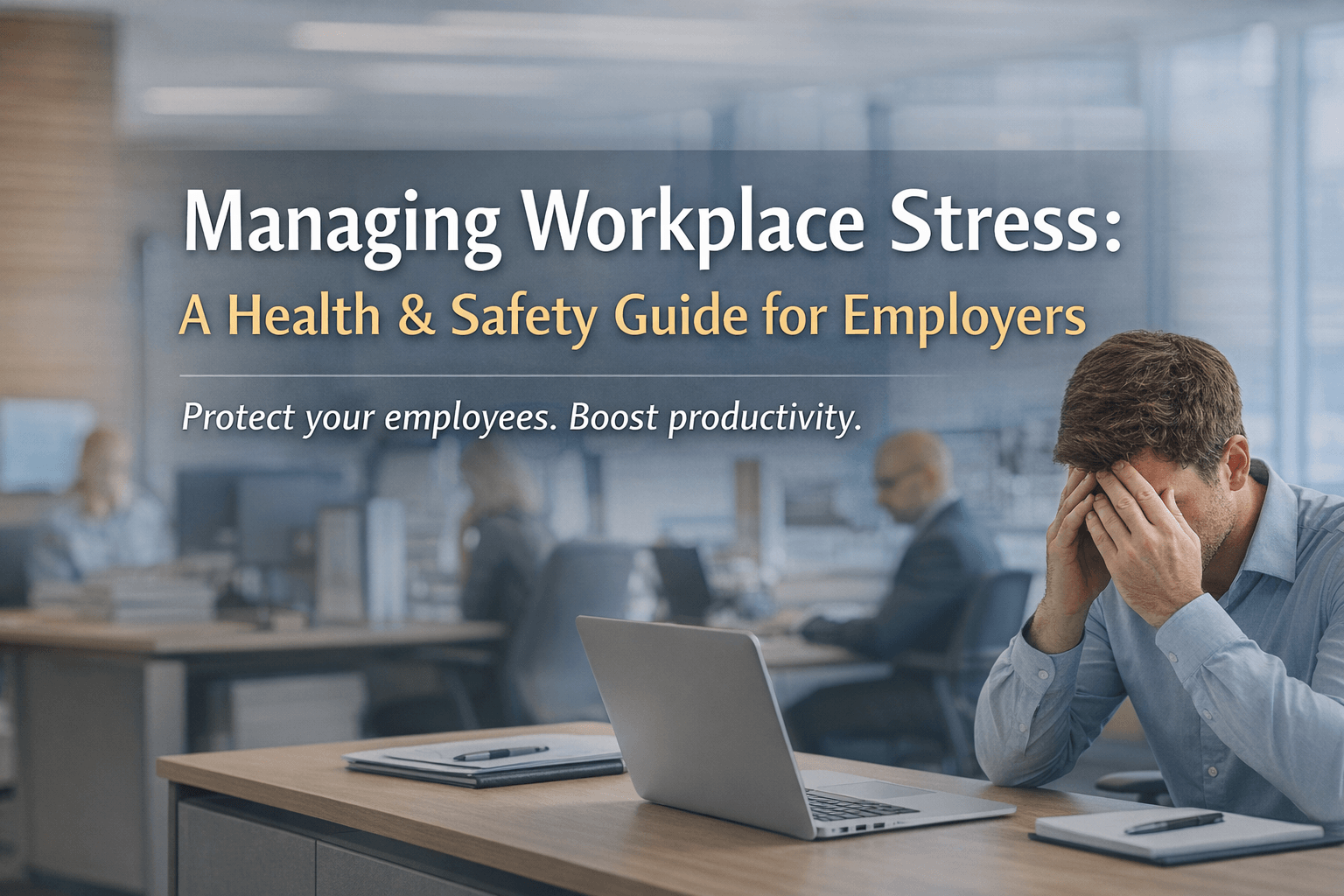
Managing Workplace Stress: A Health & Safety Guide for Employers (UK)
When people think about health and safety, they often picture visible risks, wet floors, heavy lifting, or faulty equipment. These are the hazards you can see and fix quickly.
But not all workplace risks are obvious. Some develop gradually, building over time through pressure, workload, and ongoing demands. Stress is one of the most common, and often overlooked, health and safety issues affecting today’s workplaces.
Unlike physical hazards, stress is not always easy to spot. However, its impact can be just as serious, affecting both employee wellbeing and overall business performance.
This guide explains why workplace stress matters, what causes it, and what employers can do to manage it effectively.
Is Workplace Stress a Health & Safety Issue?
Yes, workplace stress is a recognised health and safety risk in the UK.
Employers have a legal duty to protect employees from harm, and this includes risks to mental health. Work-related stress can contribute to conditions such as anxiety and depression, as well as physical symptoms like fatigue, headaches, and high blood pressure.
Managing stress is not just about supporting individuals, it's about creating a working environment that reduces risk from the outset.
🔍 What Causes Workplace Stress?
The UK Health and Safety Executive (HSE) identifies six key areas that can lead to work-related stress if not properly managed. These are known as the Management Standards.
Workplace stress often arises when there is a mismatch between what is expected of an employee and the support or control they have to meet those expectations.
For example, excessive workload or unrealistic deadlines can create pressure over time. A lack of control over how work is carried out can leave employees feeling disengaged, while poor communication or unresolved conflict can damage working relationships.
Uncertainty during periods of organisational change can also increase stress, particularly if employees feel uninformed or unsupported. In some cases, even a lack of clarity around job roles can lead to confusion and ongoing tension.
Understanding these underlying causes is the first step in preventing stress from becoming a wider issue.
Signs of Stress in Employees
Work-related stress can present itself in different ways, and the signs are not always immediately obvious.
In many cases, changes in behaviour are the first indication. An employee who is usually engaged may become withdrawn or irritable, or their performance may begin to decline. Increased sickness absence or frequent short-term absences can also be a warning sign.
Physical symptoms such as ongoing fatigue or low energy levels may also be linked to stress, particularly if they persist over time.
Recognising these signs early allows employers to take action before issues escalate.
How to Manage Stress at Work
Managing workplace stress requires a proactive approach. Rather than waiting for problems to arise, employers should focus on identifying risks early and putting practical measures in place.
One of the most effective steps is to carry out a stress risk assessment. This helps identify areas of concern within the organisation and provides a structured way to address them.
Open communication is equally important. Employees should feel able to raise concerns and discuss workload or pressure without fear of negative consequences. Regular check-ins can help managers stay aware of how their team is coping.
Workloads should also be realistic and manageable over the long term. Ongoing pressure and excessive demands are a common cause of stress, so reviewing expectations regularly can make a significant difference.
Providing support is another key factor. This might include access to mental health resources, flexible working arrangements where possible, or simply ensuring that employees feel supported by their manager.
Finally, managers themselves should be trained to recognise and respond to stress. They are often the first point of contact and play a crucial role in maintaining a healthy working environment.
Why Managing Stress Matters
Work-related stress can have a significant impact on both individuals and businesses if left unaddressed.
For employees, it can affect mental and physical health, reducing overall wellbeing and quality of life. For employers, the effects are often seen in reduced productivity, increased absence, and higher staff turnover.
Over time, this can create wider organisational challenges, affecting morale, performance, and even reputation.
Taking steps to manage stress early helps prevent these issues and supports a more stable, productive workforce.
Final Thoughts
Workplace stress should be treated in the same way as any other health and safety risk. identified early, assessed properly, and managed effectively.
Creating a mentally healthy workplace is not just about responding to problems. It is about designing work in a way that reduces unnecessary pressure and supports employees from the start.
By taking a proactive approach, employers can protect their workforce while also improving performance and long-term resilience.
📞 Need Support Managing Workplace Stress?
Managing workplace stress alongside other health and safety responsibilities can be challenging, particularly as businesses grow and demands increase.
At Ironleaf Safety Strategies, we provide practical, straightforward support to help you identify risks and put effective measures in place—without unnecessary complexity.
Whether you need help with risk assessments, workplace reviews, or ongoing health and safety support, we’re here to help you create a safer, healthier working environment.
Get in touch to find out how we can support your business.